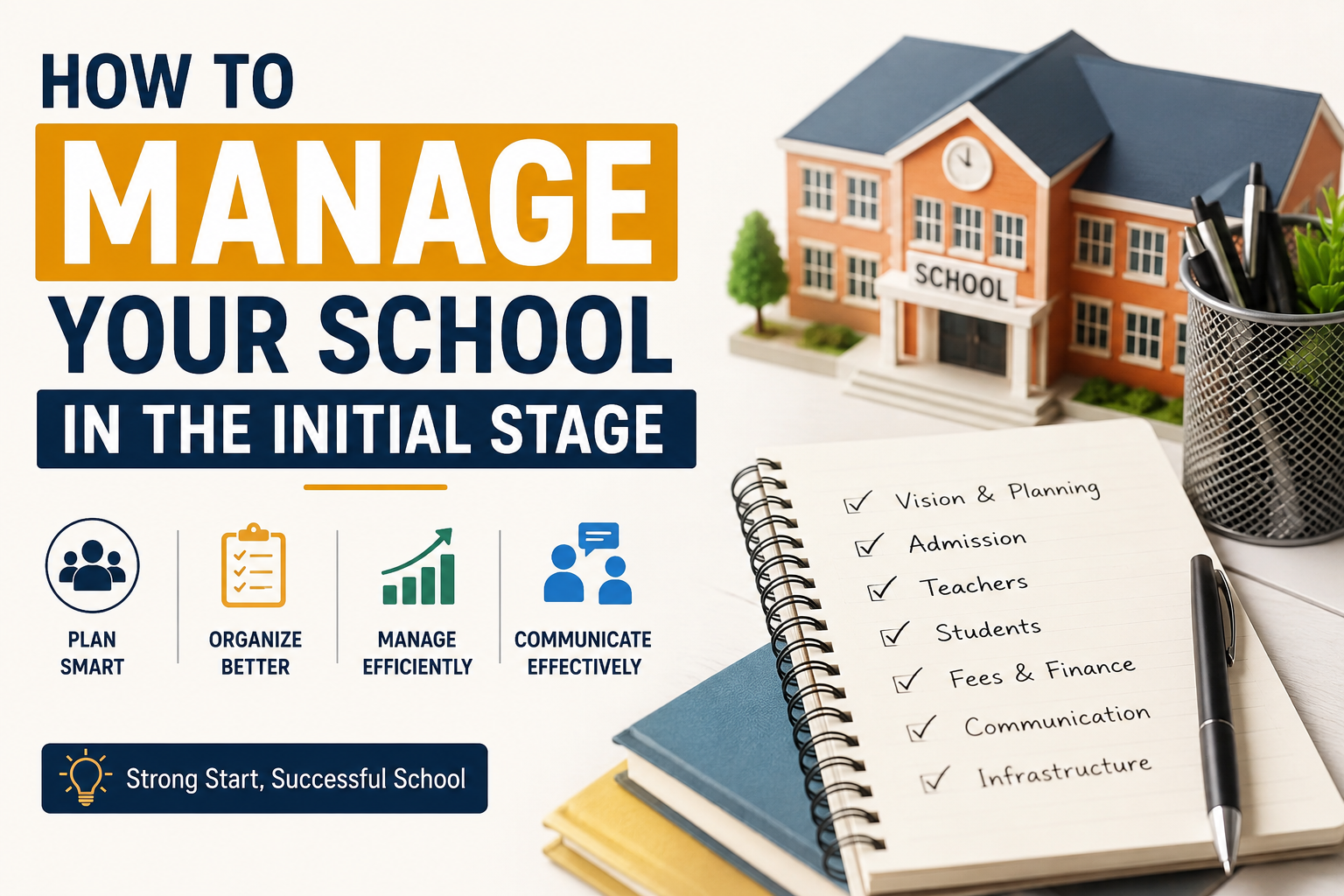
Starting and managing a school in its early stage is both exciting and challenging. In the beginning, everything feels important — admissions, staff, parents, fees, discipline, academics, transport, activities, and daily operations. Many school owners think a large building or expensive infrastructure is enough, but the real strength of a school comes from proper management, trust, and consistency.
In the initial years, a school does not grow because of advertisements alone. It grows because parents feel safe, students feel happy, and the local community starts believing in the institution.
Start With Clear Vision and Discipline
A new school should first decide its identity. Some schools focus only on marks, while others focus on overall personality development. A balanced approach usually works best.
Students should learn:
- discipline
- communication skills
- confidence
- moral values
- academic basics
In the beginning, small systems create a big impact. Morning assembly, clean uniforms, punctuality, respectful teacher behavior, and proper classroom routines help parents notice professionalism.
Build a Strong Relationship With Parents
Parents are the backbone of every school. In the early stage, personal communication matters more than formal marketing.
Simple actions create trust:
- greeting parents respectfully
- listening to complaints patiently
- informing them about student progress
- maintaining transparency in fees and rules
Many successful schools started with only a few students because parents felt emotionally connected to the management.
Focus More on Teachers Than Buildings
A motivated teacher can improve a weak classroom, but expensive furniture cannot improve poor teaching.
In the beginning:
- hire polite and responsible teachers
- train them regularly
- appreciate their work publicly
- maintain discipline without creating fear
Students remember teacher behavior for years. Parents also judge the school mainly through teacher interaction.
Keep Expenses Under Control
One common mistake in new schools is unnecessary spending. Fancy decoration, luxury interiors, and overstaffing can create financial pressure.
Initially, focus spending on:
- good teachers
- classroom cleanliness
- student safety
- educational materials
- basic technology
Financial stability is very important during the first few years.
Give Importance to Communication Skills
Modern parents expect schools to improve spoken English, confidence, and presentation skills. Even simple daily speaking activities can make a difference.
Schools can introduce:
- daily speaking sentences
- storytelling activities
- reading periods
- stage speaking opportunities
- group discussions
When parents notice confidence in their children, they naturally recommend the school to others.
Maintain Proper Records From Day One
Even a small school should maintain organized records:
- admission details
- fee records
- attendance
- staff documents
- transport details
- examination records
Proper management saves time and reduces confusion later.
Create a Positive School Environment
Children learn better in a peaceful and friendly atmosphere. Clean classrooms, smiling teachers, motivational charts, and positive language improve the school culture.
A school should feel like a place where children are excited to come every morning.
Avoid Comparing With Big Schools
New schools often become discouraged after comparing themselves with established institutions. Large schools also started small once.
Instead of competing immediately:
- focus on consistency
- improve gradually
- build local trust
- strengthen academics step by step
Growth in education takes patience.
Encourage Activities Along With Studies
Parents today appreciate schools that support creativity. Even simple activities can make students more active and confident.
Examples include:
- drawing competitions
- poem recitation
- storytelling
- sports day
- celebration of important days
- classroom presentations
Such activities create happy memories and improve student participation.
Final Thoughts
Managing a school in the initial stage is not only about administration. It is about building trust, shaping young minds, and creating a positive learning environment.
A school grows slowly through dedication, discipline, and genuine care for students. Expensive marketing may bring admissions once, but good management and parent satisfaction bring long-term success.
Every successful school was once a small beginning with a big dream.